MetaDialog is a platform that enables businesses to deploy custom large language models and conversational AI assistants trained on their proprietary data, including on-premise installations.
MetaDialog is an AI platform that enables businesses to deploy custom large language models and conversational AI solutions based on their own data. Its primary purpose is to help organizations build secure, domain-specific chatbots, virtual assistants, and automation workflows that accurately reflect their internal knowledge, processes, and terminology. MetaDialog supports both cloud and on-premise deployments, making it suitable for companies with strict data governance and compliance requirements.
The platform ingests and indexes data from multiple sources, such as knowledge bases, documents, CRM systems, and internal databases, to create tailored conversational models. It offers tools for dialog orchestration, intent recognition, context management, and response generation, allowing teams to design complex, multi-step conversations without deep machine learning expertise. MetaDialog includes analytics and monitoring capabilities to track user interactions, identify gaps in coverage, and continuously improve model performance. Built-in access controls and data isolation features help ensure that sensitive information remains protected while still being usable for AI-driven interactions.
Please sign in to comment
💬 No comments yet
Be the first to share your thoughts!
Explore 396+ top alternatives to MetaDialog

Manychat automates customer messaging across Instagram, WhatsApp, TikTok, and Messenger, turning comments and inquiries into structured chat flows for sales, support, and audience growth.
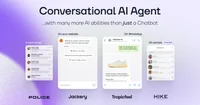
Zipchat AI is a conversational AI platform that provides ecommerce websites with automated 24/7 multilingual customer support and real-time assistance to help convert visitors into customers.

Stammer Ai is a platform for creating white-label AI chatbots and voice agents that answer questions, generate leads, schedule appointments, and handle customer interactions.
Crackeddevs is a development studio that builds custom crypto and fintech products, AI agents, chatbots, voice assistants, and workflow automation solutions for businesses.

Ultravox.ai is an open-source speech language model that processes and understands spoken language input for building voice-driven applications and conversational interfaces.