
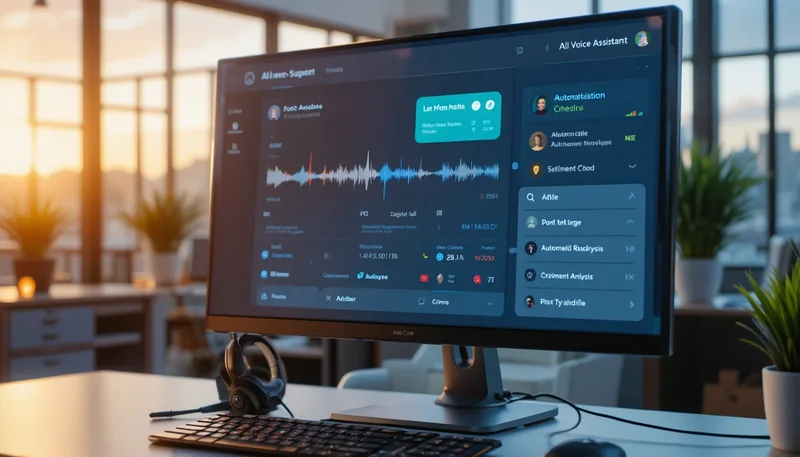
Customer support in 2026 is no longer only about answering calls. It is about speed, automation, accuracy, and customer experience. Businesses now handle thousands of conversations across phone, chat, and digital channels every day. Without automation, this becomes expensive and slow.
AI voice assistants are changing this space.
They can answer common questions, route calls intelligently, qualify leads, schedule appointments, and even solve simple problems without human intervention. This reduces missed calls, lowers wait times, and allows human agents to focus on complex cases.
In this guide, we will explore the best AI voice assistants for customer support automation in 2026. Each tool is explained clearly with practical use cases, features, and pricing insights.
Why AI Voice Assistants Matter in 2026
Before exploring more tools, it is important to understand why AI voice assistants are becoming essential.
Customer expectations are higher than ever. People want:
Instant answers
No long wait times
24/7 availability
Clear communication
AI voice assistants help businesses deliver this without hiring large support teams.
They also:
Reduce operational costs
Improve call handling speed
Provide consistent responses
Collect structured customer data
When implemented properly, they increase both efficiency and customer satisfaction.
1. CloudTalk
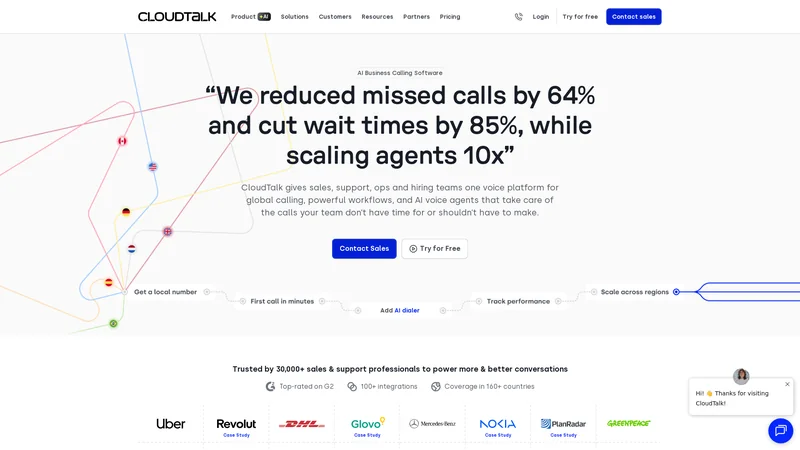 CloudTalk is an AI-powered business calling platform built for modern sales and support teams. It combines voice infrastructure, automation, and AI voice agents into one system.
Why CloudTalk Should Be at the Top
CloudTalk stands out because it does more than just basic voice automation. It provides enterprise-grade voice infrastructure across more than 160 countries with high uptime and global coverage. Based on its platform capabilities, businesses can reduce missed calls significantly and improve response time.
It also offers AI voice agents that can handle repetitive customer calls, route requests intelligently, and integrate with CRM systems. This creates a complete customer support automation environment rather than a simple voice bot.
Unlike many standalone AI tools, CloudTalk combines:
Global telephony infrastructure
AI voice automation
Performance tracking
CRM integrations
Multi-region reliability
This makes it suitable for scaling companies and distributed teams.
Key Features
AI voice agents for customer support
Smart call routing and IVR automation
Real-time analytics and reporting
Global number coverage
CRM and helpdesk integrations
Its strong infrastructure ensures reliability while automation improves efficiency.
Pricing Overview
CloudTalk offers tiered subscription plans based on features and usage. Pricing varies depending on team size, global numbers, and advanced AI features.
It is designed for startups, mid-sized businesses, and enterprise support teams.
Best Use Cases
Scaling support teams
Reducing missed customer calls
Automating repetitive inbound queries
Global customer service operations
CRM-connected support automation
CloudTalk works well for companies that want both strong infrastructure and AI-driven support automation in one platform.
2. Dialpad AI
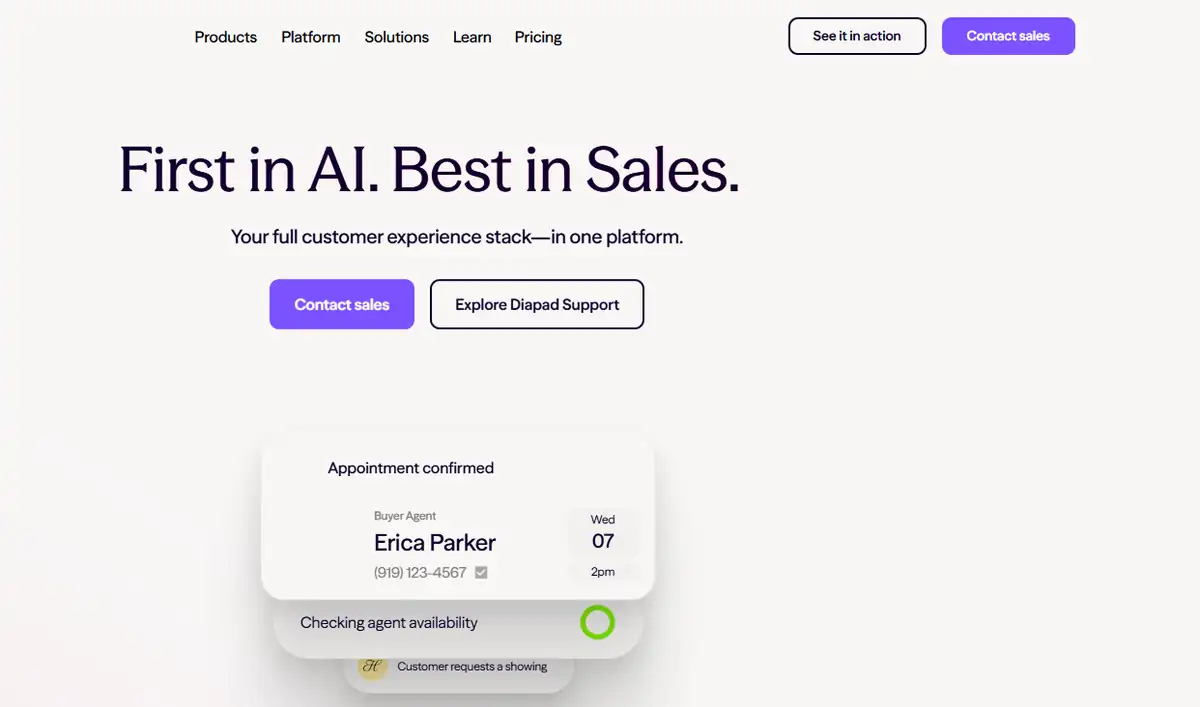 Dialpad AI is a cloud-based communication platform that integrates artificial intelligence directly into voice support.
Why You Should Use Dialpad AI
Dialpad AI provides real-time call transcription and AI-driven call insights. It can detect keywords, suggest responses to agents, and automate follow-ups.
For customer support teams, this means better quality control and faster issue resolution.
It also supports voice automation workflows and smart routing.
Key Features
Real-time voice transcription
AI call summaries
Automated note-taking
Smart call routing
Built-in analytics
It supports both automation and agent productivity.
Pricing Overview
Dialpad AI operates on subscription plans based on features and number of users.
It is suitable for growing support teams and remote operations.
Best Use Cases
Support teams needing real-time insights
Quality monitoring and coaching
Automating post-call workflows
Improving agent performance
It is especially useful when combining automation with live agent support.
3. Five9
 Five9 is a cloud contact center platform with AI-powered voice automation capabilities.
Why You Should Use Five9
Five9 offers advanced AI-driven virtual agents that can handle inbound support calls, answer FAQs, and route complex cases to human agents.
It integrates with major CRM systems and supports omnichannel customer support.
It is built for enterprise-level contact centers.
Key Features
AI virtual agents
Intelligent call routing
Omnichannel support integration
Predictive dialing
Advanced reporting tools
Its automation reduces call center pressure.
Pricing Overview
Five9 provides enterprise-level pricing based on business size and feature requirements.
It is most suitable for large-scale operations.
Best Use Cases
Enterprise customer support centers
High call volume environments
Multi-channel customer service
Advanced automation workflows
It works well for companies managing large support teams.
4. Talkdesk
 Talkdesk is an AI-powered contact center solution that focuses on automation and customer experience improvement.
Why You Should Use Talkdesk
Talkdesk provides AI-driven virtual agents that can manage inbound calls, answer repetitive questions, and transfer complex cases.
It uses AI to analyze customer sentiment and predict call outcomes.
This improves both efficiency and service quality.
Key Features
AI-powered virtual agents
Sentiment analysis
Workflow automation
CRM integration
Performance analytics
It supports data-driven customer support management.
Pricing Overview
Talkdesk offers customized enterprise pricing depending on team size and automation features.
Best Use Cases
Mid to large enterprises
AI-driven support optimization
Improving customer experience
Reducing manual call handling
It is strong for companies that prioritize advanced analytics and automation.
5. Aircall
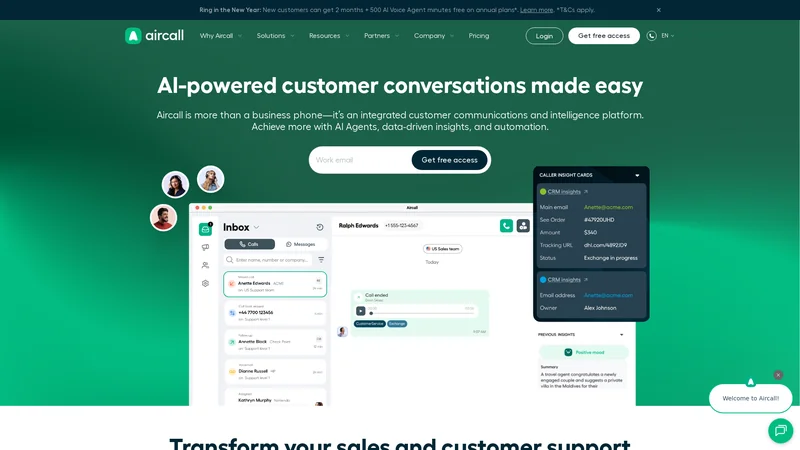 Aircall is a cloud-based phone system designed for support and sales teams. It includes automation features and AI integrations that improve customer call handling.
Aircall focuses on simplicity while still offering intelligent call routing and workflow automation.
Why You Should Use Aircall
Aircall helps teams manage inbound and outbound calls without complex infrastructure. It integrates easily with CRM platforms like HubSpot and Salesforce, which allows support agents to access customer data during calls.
It also supports automated call distribution and performance monitoring.
For growing startups and mid-sized businesses, Aircall offers a balance between automation and usability.
Key Features
Cloud-based call center system
Intelligent call routing
CRM integrations
Call analytics dashboard
Power dialer for outbound support
It simplifies customer communication while improving efficiency.
Pricing Overview
Aircall offers subscription-based pricing with different tiers depending on features and user count.
It is suitable for startups and growing companies.
Best Use Cases
Startup support teams
Remote customer service teams
CRM-connected call management
Scaling inbound support operations
Aircall works best for companies that need reliable cloud calling with smart routing and simple automation.
6. RingCentral AI
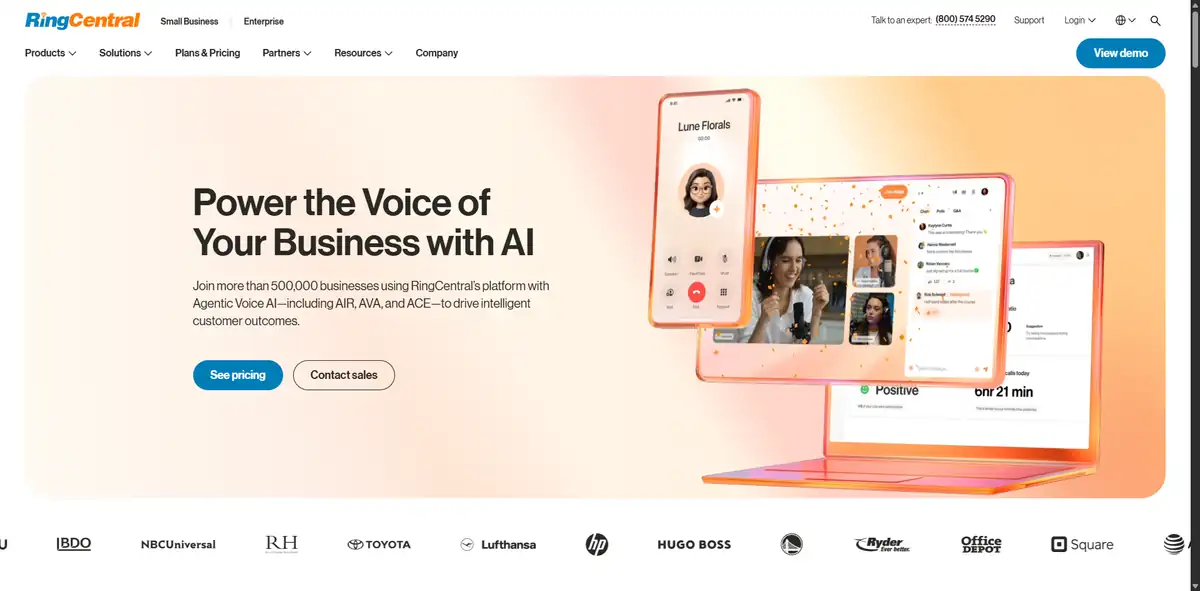 RingCentral AI is part of the larger RingCentral communications platform. It adds artificial intelligence to voice and contact center services.
Why You Should Use RingCentral AI
RingCentral AI provides real-time transcription, conversation summaries, and call analytics. It also supports automated routing and intelligent call distribution.
It helps support managers track performance and improve response quality.
Because it is part of a full communications suite, it works well for companies that manage voice, video, and messaging together.
Key Features
AI-based call transcription
Smart routing
Performance tracking
Integration with business tools
Multi-channel communication support
It combines automation with communication flexibility.
Pricing Overview
RingCentral offers tiered pricing plans depending on features and company size.
It is suitable for both mid-sized companies and enterprises.
Best Use Cases
Unified communications environments
Support teams needing analytics
Remote and hybrid support teams
Automating call summaries and reporting
It is helpful for businesses that want integrated communication tools.
7. Ada
Ada is an AI-powered customer support automation platform that includes voice and chat automation capabilities.
Why You Should Use Ada
Ada focuses on conversational AI. It can automate responses to common customer questions across voice and chat channels.
Its AI engine understands customer intent and provides structured answers. When needed, it transfers complex issues to human agents.
This reduces workload and improves first-contact resolution.
Key Features
Conversational AI automation
Intent recognition
Multichannel support
Seamless agent handoff
Custom workflow building
It is built to automate repetitive conversations.
Pricing Overview
Ada offers enterprise-level pricing based on usage and customization needs.
Best Use Cases
Automating FAQs
High-volume customer inquiries
E-commerce support
Subscription service businesses
It works well for companies aiming to reduce repetitive support calls.
8. Voiceflow
Voiceflow is a platform for designing AI voice and chat assistants.
Why You Should Use Voiceflow
Voiceflow allows teams to build custom AI voice assistants without heavy coding. It is especially useful for businesses that want to create tailored automation experiences.
It integrates with voice platforms and contact center systems, allowing flexible automation design.
Instead of using fixed templates, you can design conversation flows based on your support process.
Key Features
Visual conversation builder
Voice and chat integration
AI workflow customization
Collaboration tools
Testing and simulation tools
It gives full control over conversational design.
Pricing Overview
Voiceflow offers free and paid plans depending on project scale and collaboration needs.
Best Use Cases
Custom AI voice assistant development
Startup experimentation with automation
Prototyping customer support bots
Creating branded voice experiences
It is best for teams that want flexibility and creative control.
9. Observe.AI
Observe.AI is an AI-powered conversation intelligence platform designed to improve call center performance. While it does not replace voice infrastructure, it enhances automation by analyzing customer conversations.
Why You Should Use Observe.AI
Observe.AI listens to customer calls and provides insights into agent performance, compliance, and customer sentiment. It uses artificial intelligence to identify patterns and suggest improvements.
For support teams, this means better coaching and smarter automation decisions. By understanding common call issues, companies can automate repetitive conversations more effectively.
It supports long-term improvement in support quality.
Key Features
AI-driven call analysis
Sentiment detection
Quality assurance automation
Performance coaching insights
Compliance monitoring
It strengthens both automation strategy and human performance.
Pricing Overview
Observe.AI typically offers enterprise pricing based on call volume and feature requirements.
Best Use Cases
Large contact centers
Quality assurance automation
Improving agent performance
Identifying automation opportunities
It works best for companies looking to optimize existing voice support operations.
10. Genesys Cloud AI
Genesys Cloud AI is a powerful contact center platform with built-in artificial intelligence capabilities.
Why You Should Use Genesys Cloud AI
Genesys provides AI-driven virtual agents that can handle customer inquiries automatically. It also uses predictive routing to connect customers with the most suitable agent.
Its advanced AI tools help reduce wait times and improve call resolution rates.
For enterprises managing large support operations, this level of automation is highly valuable.
Key Features
AI virtual agents
Predictive routing
Customer journey tracking
Real-time analytics
Omnichannel support
It provides a complete ecosystem for contact center automation.
Pricing Overview
Genesys Cloud AI operates on subscription-based pricing depending on business size and features.
It is primarily designed for medium to large enterprises.
Best Use Cases
Enterprise-level customer support
High call volume environments
Advanced customer journey management
Fully automated contact centers
It is ideal for organizations that require scalable and data-driven automation.
Why Businesses Are Moving Toward AI Voice Automation
AI voice assistants are not only about reducing cost. They improve customer experience.
Key benefits include:
24/7 availability
Faster call resolution
Reduced wait times
Consistent responses
Scalable support operations
Human agents remain important. But AI handles repetitive tasks efficiently.
Comparison Table: Best AI Voice Assistants for Customer Support Automation 2026
Tool | Best For | Strength | Pricing Type |
|---|---|---|---|
CloudTalk | Global support teams | AI voice agents + global infrastructure | Subscription |
Dialpad AI | Real-time support optimization | Live transcription and AI insights | Subscription |
Five9 | Enterprise contact centers | Virtual agents and omnichannel automation | Enterprise |
Talkdesk | Experience-driven support | AI sentiment analysis and routing | Enterprise |
Aircall | Startup and SMB teams | Cloud calling with automation | Subscription |
RingCentral AI | Unified communications | AI summaries and smart routing | Tiered subscription |
Ada | Conversational automation | Multichannel AI assistant | Enterprise |
Voiceflow | Custom AI design | Visual voice assistant builder | Free + Paid |
Observe.AI | Call intelligence | AI conversation analysis | Enterprise |
Genesys Cloud AI | Large enterprises | Predictive routing and AI agents | Subscription |
Frequently Asked Questions
1. Can AI voice assistants completely replace human agents?
No. AI voice assistants handle repetitive and simple tasks. Complex issues, emotional conversations, and high-value customers still require human support.
2. Are AI voice assistants expensive?
Costs depend on business size and call volume. Small businesses can start with subscription-based tools, while enterprises may invest in advanced AI systems.
3. Do AI voice assistants improve customer satisfaction?
Yes, when implemented correctly. Faster responses and reduced wait times usually improve overall customer experience.
4. What should small businesses look for first?
Small businesses should focus on reliable voice infrastructure, CRM integration, and basic automation features before moving into advanced AI analytics.
5. Is integration important?
Yes. AI voice assistants work best when integrated with CRM systems, helpdesk platforms, and analytics tools.
Conclusion
Customer support automation in 2026 is driven by intelligent voice technology. Businesses no longer rely only on human agents to manage every call. AI voice assistants now handle repetitive queries, route calls efficiently, and provide data-driven insights.
CloudTalk stands out by combining global voice infrastructure with AI voice automation. Other platforms such as Dialpad AI, Five9, and Genesys offer advanced enterprise capabilities, while tools like Aircall and Voiceflow provide flexibility for startups and growing companies.