

Hiring in 2026 is faster, more competitive, and more data-driven than ever. Companies are no longer relying only on manual resume screening and long interview cycles. AI recruiting tools now help HR teams and startup founders find, screen, and evaluate candidates more efficiently.
But not every AI hiring tool works the same way.
Some tools focus on resume screening. Others help with candidate sourcing. Some improve interview scheduling, while others analyze skills or predict performance. The key is choosing tools that solve your specific hiring challenges.
In this guide, we explore the best AI recruiting tools in 2026. Each tool includes clear benefits, pricing overview, and real use cases so you can decide what fits your hiring process.
Why AI Is Important in Recruiting in 2026
Recruiters face three major problems:
Too many applications
Limited time
Difficulty finding qualified candidates
AI tools help solve these problems by:
Automatically screening resumes
Matching candidates to job descriptions
Reducing manual administrative tasks
Improving hiring speed
Supporting data-driven decisions
When used properly, AI improves efficiency without removing the human element of hiring.
1. HireVue
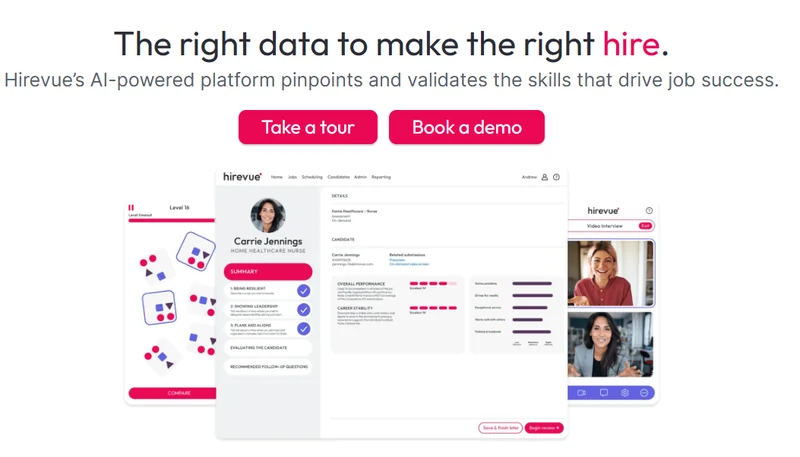
HireVue is one of the most well-known AI-powered recruiting platforms. It combines video interviewing with AI-based candidate assessment.
Why You Should Use HireVue
HireVue allows candidates to complete video interviews on their own time. The platform uses AI to analyze responses, skills, and structured assessments.
This reduces early-stage interview time and helps recruiters focus on top candidates.
It is especially useful for companies that receive high volumes of applications.
Key Features
On-demand video interviews
AI-based candidate evaluation
Structured interview guides
Skills-based assessments
The structured format increases fairness and consistency.
Pricing Overview
HireVue operates on custom enterprise pricing. It is generally designed for medium to large organizations.
Best Use Cases
High-volume hiring
Enterprise recruitment
Campus hiring programs
Remote hiring processes
It is best for organizations that need structured screening at scale.
2. Metaview
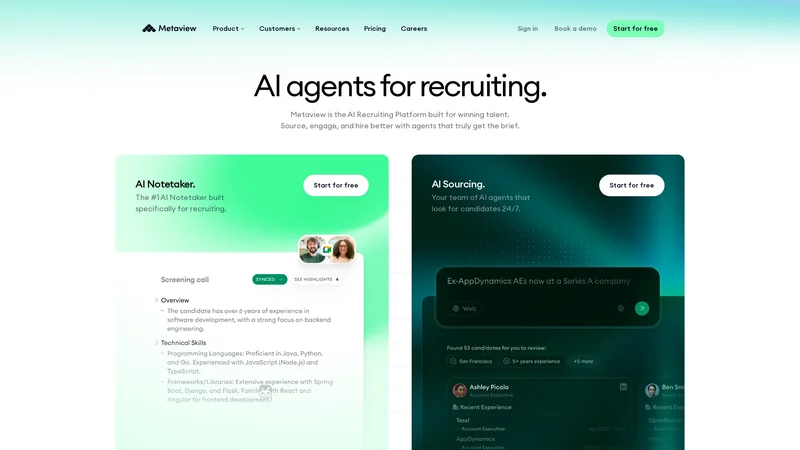 Metaview is an AI recruiting platform built to help teams source, interview, and hire better talent. It provides AI-powered agents designed specifically for recruitment workflows — from capturing interview notes automatically to sourcing candidates 24/7.
Instead of generic AI tools, Metaview focuses entirely on recruiting teams, helping them reduce manual work and make faster, data-backed hiring decisions.
Why You Should Use Metaview
Metaview is purpose-built for recruiting. It understands hiring workflows, interview structures, and candidate evaluation processes.
Its AI agents assist with:
Automatically capturing and summarizing interview notes
Surfacing key candidate insights
Improving hiring consistency
Helping recruiters focus on conversations instead of documentation
This reduces administrative workload and improves decision quality across hiring teams.
Key Features
AI Notetaker built specifically for recruiting
AI Sourcing agents that look for candidates continuously
Automated interview summaries and highlights
Candidate insight extraction
Structured hiring intelligence
Collaboration tools for recruiting teams
Analytics for better hiring decisions
It helps teams hire faster while maintaining quality and consistency.
Pricing Overview
Metaview offers customized pricing based on company size and recruiting needs. Businesses can start with a free trial and request a demo for enterprise solutions.
Best Use Cases
High-growth companies hiring at scale
Recruiting teams that run frequent interviews
Organizations wanting structured interview documentation
Companies looking to use AI agents for sourcing
Metaview works well for modern recruiting teams that want to combine AI automation with human decision-making.
3. Fetcher
 Fetcher is an AI sourcing tool that helps recruiters find and engage qualified candidates automatically.
Why You Should Use Fetcher
Finding qualified candidates is often harder than screening them. Fetcher automates candidate sourcing by identifying potential matches and even sending outreach emails.
This saves recruiters many hours of manual LinkedIn searches.
It is particularly useful for startups and growing companies.
Key Features
Automated candidate sourcing
Outreach email automation
Diversity sourcing support
CRM integration
It focuses on proactive recruiting rather than passive application review.
Pricing Overview
Fetcher offers subscription-based pricing, typically tailored to company hiring volume.
Best Use Cases
Tech hiring
Startup recruitment
Passive candidate sourcing
Scaling recruitment teams
It helps companies find talent instead of waiting for applications.
4. Paradox
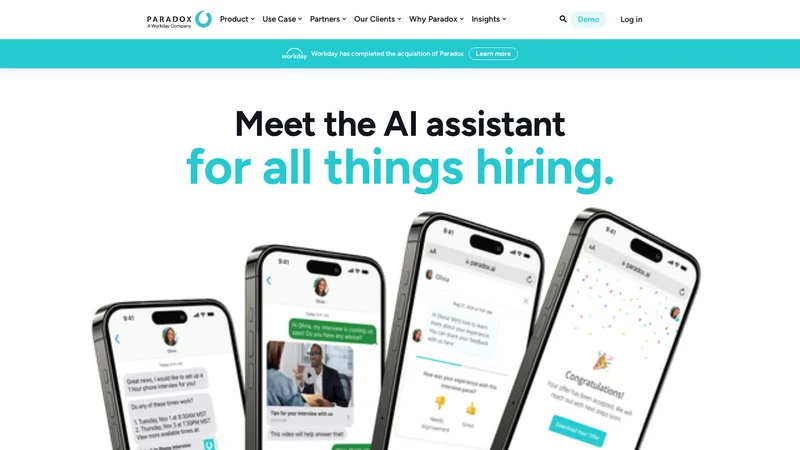 Paradox uses conversational AI to automate recruiting tasks such as scheduling and candidate communication.
Why You Should Use Paradox
Recruiters spend a lot of time on repetitive tasks like scheduling interviews and answering basic questions. Paradox uses AI chat assistants to automate these steps.
This improves candidate experience and reduces administrative workload.
It works well in fast-paced hiring environments.
Key Features
AI recruiting chatbot
Automated interview scheduling
Candidate engagement messaging
Integration with ATS systems
Automation speeds up the hiring cycle.
Pricing Overview
Paradox typically provides custom pricing based on company size and usage.
Best Use Cases
High-volume hiring
Retail and hospitality recruitment
Large HR teams
Improving candidate experience
It is ideal for companies with frequent hiring needs.
5. Eightfold AI
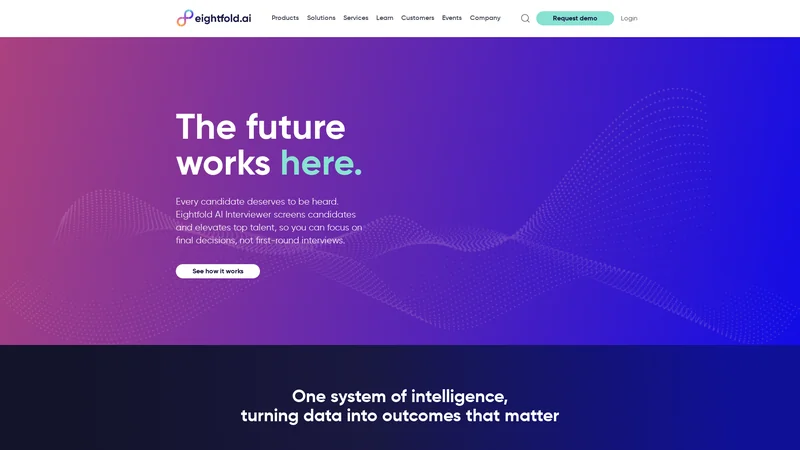 Eightfold AI is a talent intelligence platform that uses deep learning to match candidates to roles and internal opportunities.
Why You Should Use Eightfold AI
Eightfold does more than recruitment. It also supports internal mobility and workforce planning.
It analyzes skills, experience, and potential to suggest best-fit roles. This helps companies retain talent and hire more strategically.
Key Features
AI-powered talent matching
Internal mobility suggestions
Workforce analytics
Skills intelligence
It provides a long-term talent management approach.
Pricing Overview
Eightfold AI typically serves mid to large enterprises with custom pricing.
Best Use Cases
Enterprise recruitment
Talent management strategy
Internal promotion planning
Data-driven workforce decisions
It is best for organizations with complex hiring needs.
6. Manatal
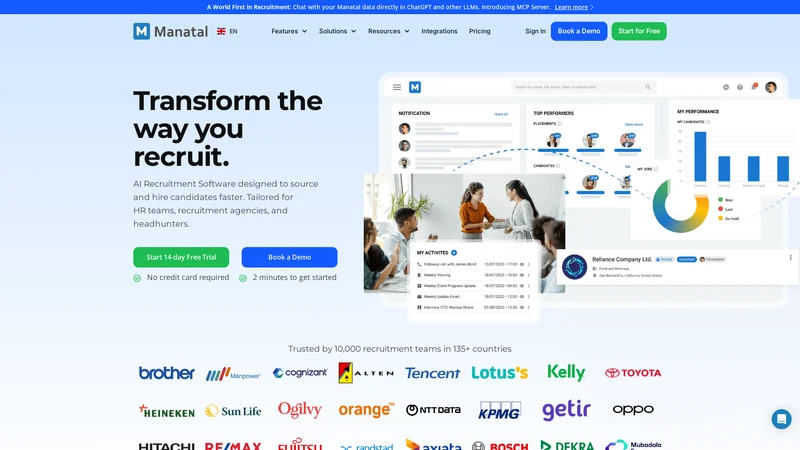 Manatal is an AI-powered applicant tracking system designed for recruitment agencies and internal HR teams. It combines candidate tracking with intelligent recommendations.
Why You Should Use Manatal
Manatal helps recruiters organize applicants in one place and automatically ranks candidates based on job fit. Instead of manually reviewing every resume, recruiters can focus on top matches first.
It also enriches candidate profiles using public data, which gives recruiters more context before interviews.
For growing companies that need structure but not enterprise-level complexity, Manatal is a practical option.
Key Features
AI candidate ranking
Resume parsing
Social media profile enrichment
Pipeline management
Team collaboration tools
It combines sourcing, tracking, and matching in one system.
Pricing Overview
Manatal offers subscription-based pricing. Plans are usually affordable compared to enterprise recruiting platforms, which makes it suitable for startups and small to mid-sized companies.
Best Use Cases
Recruitment agencies
Startup hiring teams
Managing multiple job openings
Organizing candidate pipelines
It is ideal for structured hiring without heavy corporate systems.
7. HireEZ
HireEZ focuses on AI-driven sourcing and outbound recruiting. It helps recruiters discover talent across multiple platforms.
Why You Should Use HireEZ
Traditional recruiting often depends on inbound applications. HireEZ shifts the focus to outbound sourcing. It scans multiple databases to find candidates who match your job requirements.
It also provides analytics to improve sourcing strategy.
For companies competing for top talent, proactive sourcing is essential.
Key Features
AI-powered talent search
Candidate engagement tools
Diversity sourcing insights
Recruiting analytics
It reduces dependency on job board applications.
Pricing Overview
HireEZ provides customized pricing depending on usage and hiring scale. It is generally used by growing companies and enterprise teams.
Best Use Cases
Hard-to-fill roles
Technical recruitment
Competitive hiring markets
Building talent pipelines
It works well for proactive recruitment strategies.
8. Recruitee
Recruitee is a collaborative hiring platform with smart automation features.
Why You Should Use Recruitee
Hiring decisions often involve multiple stakeholders. Recruitee centralizes communication, feedback, and candidate tracking in one place.
Its automation features help move candidates through hiring stages more efficiently.
For startups that want transparency and team involvement in hiring, this tool is very effective.
Key Features
Collaborative hiring workflows
Automated interview scheduling
Pipeline customization
Candidate sourcing integrations
It focuses on structured and team-based recruitment.
Pricing Overview
Recruitee offers tiered subscription plans based on company size and feature needs.
Best Use Cases
Startup teams
Collaborative hiring processes
Structured recruitment pipelines
Scaling internal HR systems
It supports organized hiring as companies grow.
9. SeekOut
SeekOut is an AI sourcing and talent intelligence platform. It helps recruiters find specialized talent in competitive industries.
Why You Should Use SeekOut
When hiring for technical, engineering, or niche roles, standard job boards are often not enough. SeekOut searches across broader data sources to identify qualified candidates.
It also provides diversity and skills insights, which support inclusive hiring strategies.
Key Features
Advanced talent search
AI-based candidate filtering
Diversity insights
Market analytics
It helps recruiters understand talent supply in specific markets.
Pricing Overview
SeekOut generally operates on enterprise-level pricing models based on company needs.
Best Use Cases
Technical recruitment
Hard-to-fill roles
Diversity hiring initiatives
Data-driven sourcing strategy
It is most valuable for companies hiring specialized talent.
10. Zoho Recruit
Zoho Recruit is a recruiting software that includes AI features for resume parsing and candidate matching.
Why You Should Use Zoho Recruit
Zoho Recruit is suitable for small and medium businesses that want structured hiring at an affordable price.
It automates resume screening and helps manage candidate pipelines efficiently.
It integrates well with other Zoho business tools, which makes it convenient for companies already using Zoho products.
Key Features
Resume parsing
Candidate tracking
Interview scheduling
CRM integration
It balances automation and affordability.
Pricing Overview
Zoho Recruit offers both free and paid plans. Paid plans unlock advanced automation and integrations.
Best Use Cases
Small business hiring
Recruitment agencies
Budget-conscious startups
Structured applicant tracking
It provides a simple but effective hiring system.
11. Greenhouse
Greenhouse is a structured hiring platform that uses automation and data to improve recruitment decisions. It is widely used by growing startups and mid-sized companies.
Why You Should Use Greenhouse
Greenhouse focuses on structured hiring. This means every candidate goes through a consistent evaluation process. This reduces bias and improves decision quality.
It also provides strong reporting tools that help founders and HR leaders understand hiring performance.
If you want to build a professional and repeatable hiring process, Greenhouse is a strong option.
Key Features
Structured interview kits
Automated workflows
Hiring analytics dashboards
Integration with sourcing tools
It improves organization and hiring transparency.
Pricing Overview
Greenhouse uses custom pricing based on company size and hiring volume. It is usually best suited for growing companies rather than very small teams.
Best Use Cases
Scaling startups
Structured hiring processes
Data-driven recruitment
Improving hiring consistency
It is helpful when hiring becomes frequent and complex.
12. Workable
Workable is an AI-powered recruiting platform designed for small to mid-sized companies.
Why You Should Use Workable
Workable helps automate candidate sourcing and screening. It uses AI to recommend candidates and suggest interview questions.
For companies without large HR departments, Workable simplifies the recruitment workflow.
It combines sourcing, tracking, and communication in one system.
Key Features
AI candidate recommendations
Resume screening
Interview scheduling
Built-in job posting distribution
It saves time for small hiring teams.
Pricing Overview
Workable offers subscription-based pricing with different plans depending on hiring needs.
Best Use Cases
Small to medium businesses
Startups hiring regularly
Managing multiple open roles
Automating screening tasks
It balances automation and usability.
Comparison Table of Best AI Recruiting Tools 2026
Tool | Main Strength | Best For | Pricing Type |
|---|---|---|---|
HireVue | AI video interviews | High-volume hiring | Enterprise |
Metaview | AI recruiting agents (Notetaker + AI Sourcing) | Structured interviews | Enterprise |
Fetcher | Automated sourcing | Startups and tech hiring | Subscription |
Paradox | Chatbot automation | High-volume recruiting | Custom |
Eightfold AI | Talent intelligence | Enterprise workforce planning | Custom |
Manatal | AI candidate ranking | Recruitment agencies | Subscription |
HireEZ | Proactive sourcing | Competitive talent markets | Custom |
Recruitee | Collaborative hiring | Growing startups | Subscription |
SeekOut | Specialized talent search | Technical hiring | Enterprise |
Zoho Recruit | Affordable ATS | Small businesses | Free + Paid |
Greenhouse | Structured hiring | Scaling companies | Custom |
Workable | AI screening and sourcing | SMBs and startups | Subscription |
Frequently Asked Questions
1. Are AI recruiting tools suitable for small businesses?
Yes. Many tools such as Zoho Recruit, Manatal, and Workable offer affordable plans designed for small teams.
2. Can AI replace human recruiters?
No. AI tools assist with screening and automation, but final hiring decisions should involve human judgment.
3. Do AI recruiting tools reduce bias?
Some tools are designed to reduce bias by focusing on skills and structured evaluations. However, companies must still monitor fairness carefully.
4. Which tool is best for high-volume hiring?
HireVue and Paradox are strong choices for high-volume recruitment environments.
5. What should startups prioritize first?
Startups should prioritize tools that save time, automate repetitive tasks, and improve candidate experience without adding unnecessary complexity.
Conclusion
AI recruiting tools in 2026 are transforming how companies hire. They reduce manual workload, improve efficiency, and support better hiring decisions through data and automation.
However, success depends on choosing tools that match your hiring stage and company size. Startups may benefit from flexible and affordable platforms, while enterprises may require advanced analytics and large-scale automation.
AI should support human recruiters, not replace them. When used wisely, these tools help companies hire faster, smarter, and more fairly.