
Tessl is a platform that lets users discover, test, and compare AI models and agents from multiple providers in a unified, searchable registry.
Tessl is an AI evaluation and benchmarking platform designed to help teams systematically test, compare, and monitor language models and AI agents. It provides a centralized registry where users can define evaluation tasks, datasets, and metrics, then run consistent tests across multiple models and configurations. Tessl supports both quantitative metrics (such as accuracy, latency, and cost) and qualitative assessments, enabling teams to understand real-world performance rather than relying on isolated prompts.
With Tessl, users can create reusable evaluation suites for use cases like question answering, code generation, content moderation, summarization, or domain-specific reasoning. The platform allows side-by-side model comparisons, version tracking, and performance history so teams can see how changes to prompts, system instructions, or model selection affect outcomes over time. Tessl also supports structured experiment definitions, making it easier to reproduce results and share evaluation setups across teams.
Please sign in to comment
💬 No comments yet
Be the first to share your thoughts!
Explore 1000+ top alternatives to Tessl

MindStudio is a platform for visually designing, configuring, and deploying custom AI applications and workflows using large language models and integrated data sources.

Genie 3 by Google is a world-modeling AI that learns from 2D videos to generate interactive, controllable environments and agents for games and simulations.

Hexagen World AI is a platform for creating, managing, and interacting with AI-powered virtual characters and agents across immersive digital environments and applications.
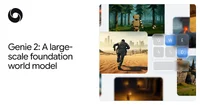
Google Genie 2 is a generative world model that converts user prompts into interactive, playable 2D games and simulations directly from pixels.

AI Studio by Meta is a platform for building, customizing, and deploying AI assistants across Meta apps, websites, and messaging experiences using Meta’s models and tools.

The AGI News is a curated news platform that aggregates, summarizes, and organizes the latest developments in artificial intelligence and AGI from diverse online sources.

Doppl by Google is a research platform that explores using AI to generate and control personalized video avatars from text and audio inputs.
Human or Not 2 is a web-based game that challenges players to chat and decide whether their conversation partner is a human or an AI.