Sanctum AI is a platform that creates customizable AI “Digital Souls” for interactive characters, enabling persistent memory, unique personalities, and multimodal communication across virtual experiences.
Sanctum AI is a privacy-focused platform that enables users and organizations to deploy and manage AI models in secure, controlled environments. It provides infrastructure to run large language models and other generative AI systems locally or within a private cloud, ensuring that sensitive data never leaves the user’s environment. The platform supports model orchestration, fine-tuning, and integration with existing applications, allowing teams to build custom AI workflows tailored to their specific needs.
Key capabilities include secure model hosting, access control, and detailed monitoring of model usage and performance. Sanctum AI offers APIs and SDKs that make it easier for developers to embed AI capabilities into internal tools, customer-facing products, or data pipelines without exposing proprietary or regulated information to third-party services. It also facilitates collaboration between data science, security, and engineering teams by providing a centralized interface for managing models, configurations, and permissions.
Please sign in to comment
💬 No comments yet
Be the first to share your thoughts!
Explore 801+ top alternatives to Sanctum AI
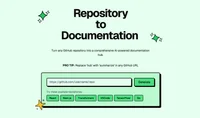
Generate structured, readable documentation from any GitHub repository by automatically analyzing code, files, and project structure to produce summaries, overviews, and reference materials.
Tencentcloud is a cloud computing platform that provides scalable infrastructure, AI services, and integrated tools for building, deploying, and managing applications across Tencent’s digital ecosystem.

Superluminal provides an AI-powered code interpreter API that executes, analyzes, and explains code to support building and running data dashboards and analytical workflows.

NeuroBlock is an AI laboratory that optimizes enterprise AI models using curated datasets, provides private on-premise integrations, builds lead generation tools, and maintains an OpenData platform.

Boost.space is a data integration and synchronization platform that centralizes, unifies, and enriches business data, serving as an operational database for Make, n8n, and Zapier.