OpenMMLab is an open-source computer vision platform providing modular libraries, algorithms, and pretrained models for tasks such as classification, detection, segmentation, and video understanding.
OpenMMLab is an open-source computer vision ecosystem designed to provide a complete, modular framework for deep learning–based visual perception. It offers a unified platform for research and production across tasks such as image classification, object detection, instance and semantic segmentation, pose estimation, video understanding, and 3D vision. Built on PyTorch, OpenMMLab streamlines the development, training, evaluation, and deployment of state-of-the-art vision models at scale.
The ecosystem consists of more than 20 specialized libraries (including MMClassification, MMDetection, MMSegmentation, MMAction2, MMTracking, MMRotate, MMEditing, and MMDetection3D), with over 250 algorithm implementations and 2,000+ pre-trained models. It provides standardized configuration systems, modular components (backbones, necks, heads, data pipelines), and extensive model zoos covering both classic and cutting-edge architectures. OpenMMLab supports distributed training, mixed-precision acceleration, and flexible evaluation protocols, and integrates with ONNX and various deployment backends for inference optimization. Comprehensive documentation, tutorials, and example projects facilitate rapid onboarding and reproducible experimentation.
Please sign in to comment
💬 No comments yet
Be the first to share your thoughts!
Explore 747+ top alternatives to Openmmlab

World Labs provides spatial intelligence models that perceive, generate, and interact with 3D environments for applications such as robotics, simulation, mapping, and virtual reality.

Polymath Robotics provides autonomy and safety software that enables off-highway vehicles to navigate, operate, and perform tasks with minimal human intervention.
Depth Anything 3 is a state-of-the-art monocular depth estimation model designed to recover detailed
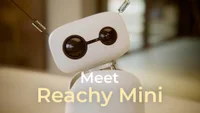
Reachy Mini is a compact, open-source humanoid robot platform for research and education, enabling manipulation, vision-based interaction, and reinforcement learning experiments.