AutoGPT is a platform for building AI agents that automate multi-step digital tasks, integrate with online services, and manage workflows through natural-language instructions.
AutoGPT is an AI automation framework designed to help you build and deploy intelligent agents that can perform complex digital tasks with minimal human input. Its primary purpose is to orchestrate multi-step workflows—such as research, content creation, data analysis, and task management—by allowing agents to plan, execute, and refine actions autonomously. By connecting reasoning, memory, and tool usage, AutoGPT transforms large language models into practical, task-oriented assistants that work across your existing tools and platforms.
AutoGPT supports modular “skills” and plugins, enabling agents to browse the web, interact with APIs, manipulate files, and integrate with common productivity and development tools. It provides configurable goals, constraints, and feedback loops so agents can break down objectives into sub-tasks, evaluate intermediate results, and adjust their approach. Persistent memory and context handling allow agents to learn from previous runs, maintain project state, and reuse information across sessions. The platform also offers a web-based interface and developer-friendly configuration options, making it suitable for both technical and non-technical users.
Please sign in to comment
💬 No comments yet
Be the first to share your thoughts!
Explore 1000+ top alternatives to AutoGPT

MindStudio is a platform for visually designing, configuring, and deploying custom AI applications and workflows using large language models and integrated data sources.

Happyrobot is an AI-native operating system that learns your business context, makes autonomous decisions, and executes operational tasks across systems in real time.
Relevance AI is a platform that lets teams build, deploy, and manage AI agents for data analysis, workflows, and customer-facing applications without extensive coding.
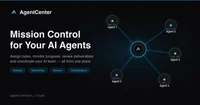
AgentCenter is a centralized dashboard for managing OpenClaw agents, where users assign tasks, track progress, review outputs, and coordinate multi-agent workflows from one interface.