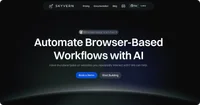
Skyvern is a platform that uses large language models and computer vision to automate complex browser-based workflows, replacing manual web tasks and fragile automation scripts.
Skyvern is an AI-powered platform for automating complex, browser-based workflows using large language models and computer vision. It is designed to replace brittle, script-based automation with a system that can understand, navigate, and interact with modern web applications more like a human user. The primary purpose of Skyvern is to fully automate repetitive, manual tasks performed in the browser, such as data entry, form submission, data extraction, and multi-step business processes across different web systems.
Using LLMs, Skyvern can interpret page content, labels, and dynamic elements without relying solely on fixed CSS selectors or XPath, making automations more resilient to UI changes. Computer vision capabilities allow it to recognize buttons, fields, and other interface components visually, which further reduces breakage when layouts are updated. Skyvern supports complex workflows that span multiple pages, sessions, and applications, including conditional logic, branching paths, and error handling. It also provides monitoring, logging, and observability so teams can track execution, debug failures, and maintain reliability at scale.
Please sign in to comment
💬 No comments yet
Be the first to share your thoughts!
Explore 894+ top alternatives to Skyvern

Boost.space is a data integration and synchronization platform that centralizes, unifies, and enriches business data, serving as an operational database for Make, n8n, and Zapier.

Wild Moose is an AI tool that automatically investigates production alerts by analyzing logs, metrics, and code to help developers identify and resolve root causes.
Automaited is a platform that lets users design, deploy, and manage AI agents to automate multi-step business workflows and operational processes across tools and systems.