
ResearchGPT is a large language model-based research assistant that lets users interact conversationally with academic papers to explore, query, and summarize their contents.
ResearchGPT is an open-source, LLM-powered research assistant designed to help users interact deeply with academic papers. Instead of manually scanning PDFs, users can upload or link to a research article and engage in a conversational interface that answers questions, explains concepts, and summarizes sections in natural language. The tool parses the paper’s content and uses a large language model to provide context-aware responses grounded in the source material.
Key capabilities include extracting and clarifying methods, results, and conclusions; generating concise summaries of sections or the entire paper; and explaining technical terms or equations in more accessible language. ResearchGPT can also help compare claims within a paper, highlight limitations, and point out key assumptions, supporting a more critical reading of the literature.
Please sign in to comment
💬 No comments yet
Be the first to share your thoughts!
Explore 138+ top alternatives to ResearchGPT
Genspark AI Browser is a web browser that integrates AI-driven search, content summarization, and assistant features directly into the browsing experience.

Neo by Norton is a desktop web browser that integrates AI assistants, automated workflows, and sidebar tools to help users search, summarize, and manage web content.

AcademicGPT is an AI-powered assistant that helps students and researchers generate, revise, and analyze academic texts, including essays, reports, literature reviews, and research summaries.
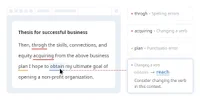
Wordvice Ai is an AI writing assistant that revises, edits, paraphrases, and translates text through an integrated editor and specialized language-processing tools.

Jules by Google is a browser-based AI workspace that lets users create, organize, and collaborate on projects using custom agents, tools, and shared workboards.