Giga is an AI platform that builds and orchestrates agents to automate complex enterprise workflows and handle customer interactions across multiple channels at scale.
Giga is an enterprise-grade platform for building and deploying AI agents that can manage complex, multi-step workflows across customer-facing and internal operations. Its primary purpose is to help organizations move beyond simple chatbots by orchestrating AI agents that understand context, integrate with existing systems, and operate reliably at scale. Giga focuses on delivering human-like interactions while maintaining the control, security, and observability required by large enterprises.
The platform provides tools to design, configure, and deploy AI agents that can handle tasks such as customer support, onboarding, account management, and process automation. Giga supports integration with enterprise systems (such as CRMs, ticketing tools, and internal APIs), enabling agents to read and update data, trigger workflows, and complete transactions end-to-end. It includes capabilities for conversation management, state tracking, and escalation to human agents when needed. Governance and monitoring features allow teams to define policies, review interactions, measure performance, and continuously improve agent behavior without extensive engineering effort.
Please sign in to comment
💬 No comments yet
Be the first to share your thoughts!
Explore 1000+ top alternatives to Giga

MindStudio is a platform for visually designing, configuring, and deploying custom AI applications and workflows using large language models and integrated data sources.

Amnetdigital is a data and AI-driven platform that assesses, optimizes, and manages digital experiences, software quality, and business operations for enterprises.
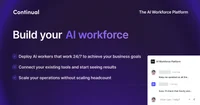
Continual AI is an AI agent platform that lets businesses deploy autonomous “AI workers” to execute
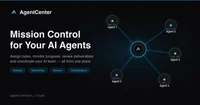
AgentCenter is a centralized dashboard for managing OpenClaw agents, where users assign tasks, track progress, review outputs, and coordinate multi-agent workflows from one interface.